Secure by Design
Embed security into your software development lifecycle from code to deployment
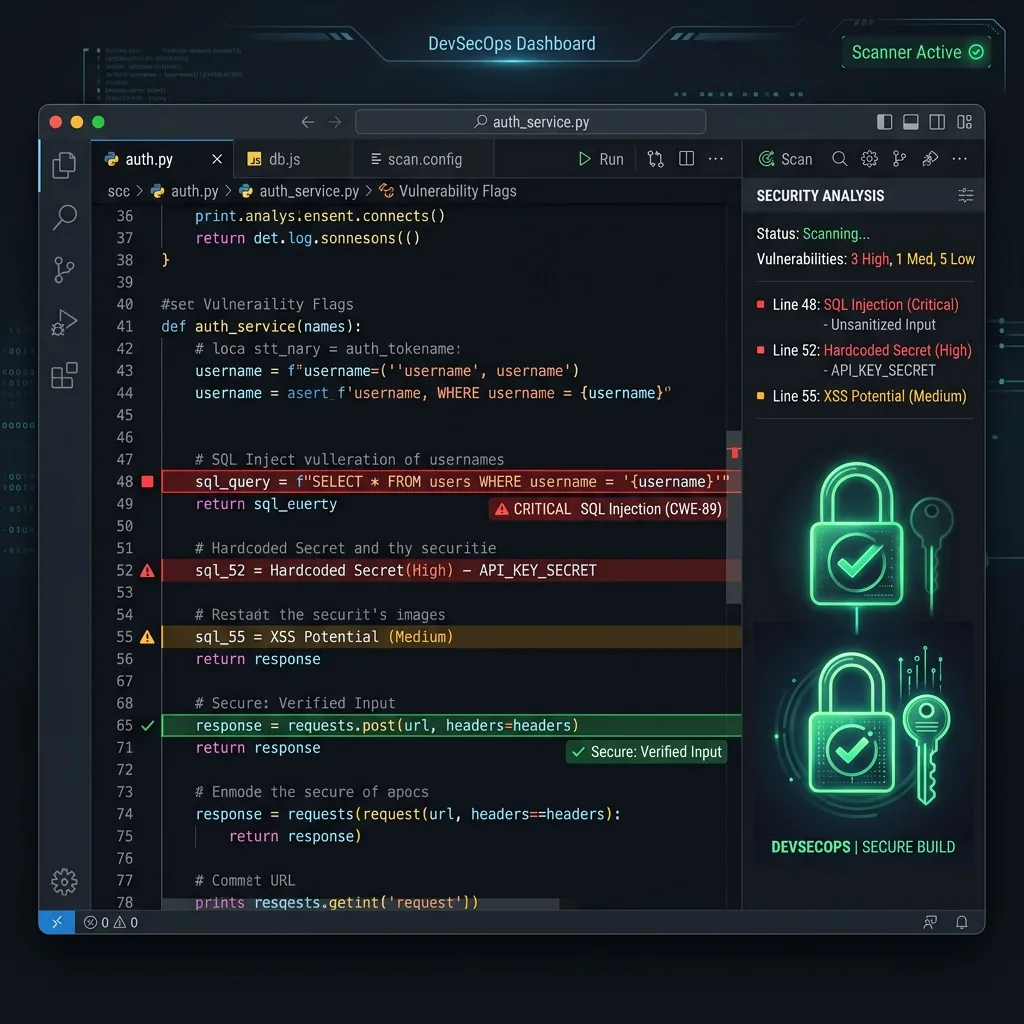
Application Security integrates security practices into every phase of software development—from design and coding through testing, deployment, and maintenance. Our AppSec team works alongside development teams to identify vulnerabilities early, implement secure coding practices, and build security into CI/CD pipelines.
Compliance Frameworks
Overview
Application Security covers the processes, tools, and practices that protect software applications from threats throughout their lifecycle. It includes secure code review, SAST/DAST scanning, dependency management, API security testing, and developer security training.
Applications are the primary attack vector for data breaches. 74% of breaches involve the human element, and web applications remain the top attack surface. Shifting security left—into development—reduces vulnerabilities by 80% compared to finding them in production.
Programs
Establish a Secure Software Development Lifecycle with security gates, automated scanning, and developer training. Integrates security into agile workflows without slowing development velocity.
Deep-dive security testing of web applications, mobile apps, APIs, and desktop applications. Manual testing by experienced Application Security engineers uncovers business logic flaws and complex vulnerabilities.
Manual and automated analysis of application source code to identify security flaws, insecure patterns, and compliance violations. Covers authentication logic, session management, data handling, and cryptographic implementations.
Integrate SAST, DAST, SCA, IAST, and secrets scanning into CI/CD pipelines. Includes tool selection, policy configuration, and developer workflow integration.
Comprehensive security testing of REST, GraphQL, and SOAP APIs including authentication, authorization, rate limiting, data validation, and business logic abuse.
Services included
Methodology
Evaluate application architecture and design for security implications.
Identify vulnerabilities in source code through static and manual analysis.
Test running applications for vulnerabilities through automated and manual techniques.
Support developers in fixing vulnerabilities and validate remediation effectiveness.
Process
Catalog all applications, APIs, and services with criticality classifications.
Application portfolio with risk ratingsCatalog all applications, APIs, and services with criticality classifications.
Application portfolio with risk ratingsIdentify threats, attack vectors, and security requirements for each application.
Threat models with risk-ranked attack scenariosIdentify threats, attack vectors, and security requirements for each application.
Threat models with risk-ranked attack scenariosExecute comprehensive security testing using automated and manual techniques.
Vulnerability findings with exploitation evidenceExecute comprehensive security testing using automated and manual techniques.
Vulnerability findings with exploitation evidenceSupport development teams in implementing fixes with guidance and retesting.
Remediated code with verification resultsSupport development teams in implementing fixes with guidance and retesting.
Remediated code with verification resultsEmbed security scanning into CI/CD for continuous vulnerability detection.
Automated security gates in development pipelineEmbed security scanning into CI/CD for continuous vulnerability detection.
Automated security gates in development pipelineTrack security metrics, train developers, and refine testing approaches.
Monthly AppSec metrics and improvement reportsTrack security metrics, train developers, and refine testing approaches.
Monthly AppSec metrics and improvement reportsDeliverables
Comprehensive vulnerability report with CVSS scoring, business impact, and remediation guidance.
STRIDE or PASTA threat models with attack trees and mitigations for each identified threat.
Language-specific secure coding standards, anti-patterns, and best practices for developers.
CI/CD security integration with tool configurations, policies, and workflow documentation.
Custom security training content including hands-on labs and vulnerability examples.
Tracking metrics for vulnerability density, fix time, and security test coverage.
Benefits
Catch vulnerabilities early in development when they are cheapest and easiest to fix.
Enable developers to write secure code through training, tools, and accessible guidance.
Continuous security scanning in CI/CD pipelines catches vulnerabilities with every build.
Proactive security practices prevent accumulation of security debt in application code.
Automated security gates reduce manual review bottlenecks while maintaining security standards.
Dependency analysis prevents vulnerable third-party libraries from entering your applications.
Metrics
Engagement Formats
Rapid assessment of application security posture with critical finding identification.
Comprehensive testing including code review, DAST, API testing, and business logic analysis.
Full SDLC security integration with pipeline automation, training, and process maturity.
FAQ
Contact
Speak with a lead security engineer about scope, timeline, and what success looks like for your assessment.
 AlphaSploit